CHILLS
Goosebumps you can film
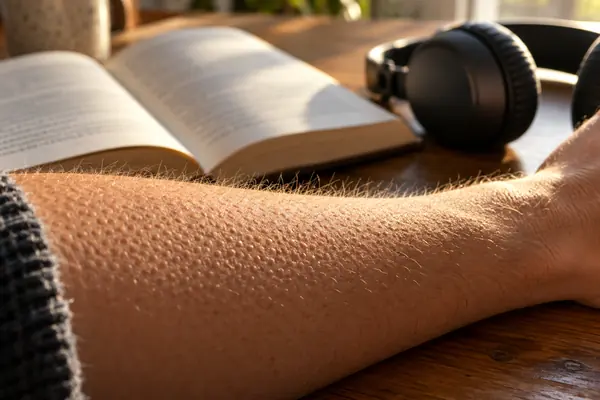
In a 2017 study, all 27 listeners reported chills from recited poems, and a camera recorded visible goosebumps in 11 of them. Brain scans showed reward areas at work.
See the numbers doodlepoems

WHAT THE RESEARCH SAYS
A poem can raise the hairs on your arm.
Researchers have measured it: listeners get chills from recited poetry, often right at the close of a line, a stanza or the whole poem. Rhyme and regular metre make lines more pleasing, and rhyme can even make a saying seem more true.
CHILLS cluster at the close
How young people use poetryTHE SHORT ANSWER
Poems work on the body as well as the mind.
Their form helps decide where and how.
CHILLS
In a 2017 study, all 27 listeners reported chills from recited poems, and a camera recorded visible goosebumps in 11 of them. Brain scans showed reward areas at work.
See the numbersRHYME
People judged "What sobriety conceals, alcohol reveals" more accurate than the same idea without the rhyme. The effect shrank when they were warned to judge meaning, not sound.
Why rhyme worksYOUNG POETS
In a 2024 survey of 4,372 children aged 8 to 16 in England, 48.8% engaged with poetry in their free time, reading, listening, writing or performing it.
How they do it
FOUR WAYS TO TRY IT
You do not need a lab. These small experiments follow the studies above and work with any poem you like.
The chills in the 2017 study came from recited poems. Hearing a poem, rather than skimming it, gives sound and rhythm a chance to work.
Pay attention to the last words of lines and stanzas. That is where listeners' chills clustered most.
Passages that speak directly to someone, a 'you' or a loved one, predicted chills even after allowing for where they fell in the poem.
Rewrite a rhyming saying without its rhyme and ask whether it still sounds as true. Then judge only what it says.
TWO NUMBERS WORTH KNOWING
One figure from a poetry and brain study,
one from a national survey of pupils.
40.7%
Listeners with goosebumps caught on camera
11 of 27 listeners showed objective goosebumps on video, similar to rates reported for music (40%) and film soundtracks (43.1%). All 27 reported chills, on average 1.33 a minute.
GOOSEBUMPS · SCAN 2017
48.8%
8 to 16-year-olds engaging with poetry, 2024
Up slightly from 46.1% in 2018. Pupils receiving free school meals were more likely to engage with poetry in their free time than their peers.
ENGAGEMENT · NATIONAL LITERACY TRUST
In the 2017 study, poems participants had never heard before raised chills as well as their own favourites, and chills could come together with signs of negative feeling, such as frowning muscle activity.
HOW YOUNG PEOPLE MEET POETRY
Pick a way of engaging with poetry to see how common it was among 8 to 16-year-olds in England who already engage with poetry in their free time. The bar shows how common each one is.
Based on the National Literacy Trust report Children, Young People and Poetry in 2024, an online survey of 4,372 pupils aged 8 to 16 from 28 schools in England, May to June 2024.
WHY RHYME WORKS
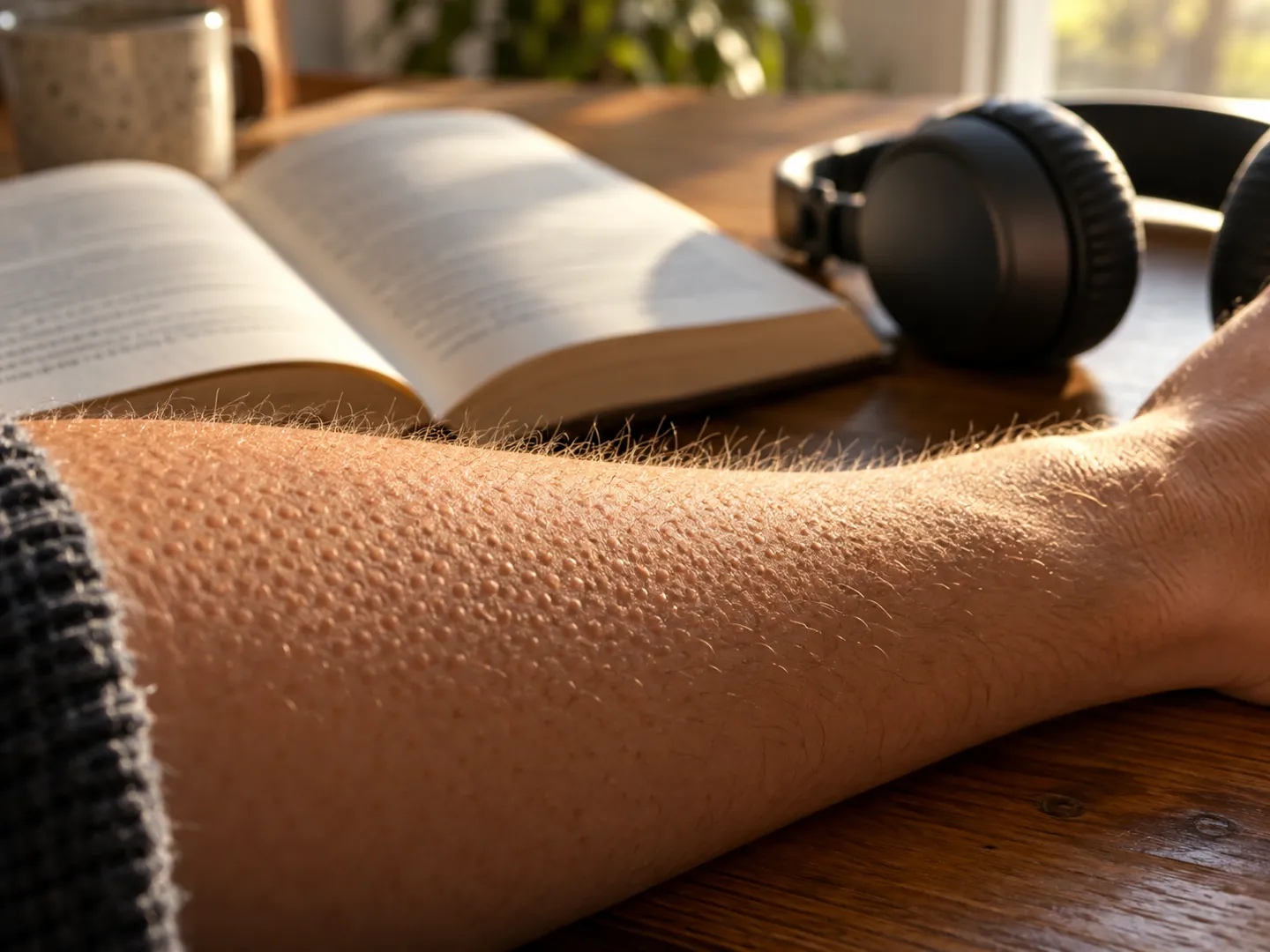
Researchers explain rhyme's pull through processing fluency: rhyming lines are easier for the mind to handle, and that ease can be mistaken for truth. Like repetition, rhyme gives a statement a boost that people misattribute to its accuracy.
A 2013 study that altered German poems found that both rhyme and regular metre led listeners to like the stanzas more, process them more intensely and feel more positive emotion, confirming ideas about poetic form that go back to ancient rhetoric.
Questions
Yes. In a 2017 study, all 27 listeners reported chills while hearing recited poems, and video showed visible goosebumps in 11 of them, a rate similar to music.
Most often towards the end: of the whole poem, of a stanza and of single lines. Passages addressing someone directly, such as a 'you', also made chills more likely.
A 2000 study found people rated rhyming aphorisms as more accurate than non-rhyming versions with the same meaning. Researchers think rhyme makes a statement easier to process, and that ease is misread as truth.
In a 2013 experiment with German stanzas, both rhyme and regular metre increased how much listeners liked the poems and how positive the emotions they felt were.
The National Literacy Trust found 48.8% of 8 to 16-year-olds in England engaged with poetry in their free time in 2024, up from 46.1% in 2018.
Updated
ABOUT THIS NAME
doodlepoems.com is part of the DoodleSale portfolio. It isn't in an auction right now, but you can ask about leasing it.